

Crochet Finishing: Don’t Skip These 3 Steps

You finally finished your crochet project – CONGRATS! Now comes finishing. Crochet finishing refers to the steps you take between the end of your last stitch and actually using your crocheted piece. Following the three finishing steps outlined in this post will preserve all of your hard work and make sure your piece stands the test of time. As eager as you might be to use your crochet before finishing, don’t skip these three steps!
This post contains affiliate links that support the content on TLYCBlog.com. All opinions are my own. Find my Privacy & Disclosures Policy here.

CLICK HERE TO PIN THIS POST
I’m going to shoot straight with you – finishing is every crocheter’s least favorite part of the process. Crochet finishing can be tedious, time-consuming, and some steps might seem pointless. But I can assure you, every tip I offer in this post works toward taking your project from done to truly polished and complete. Make time for finishing your projects so you can have a piece that you are truly proud of.
Step 1: Fastening Off
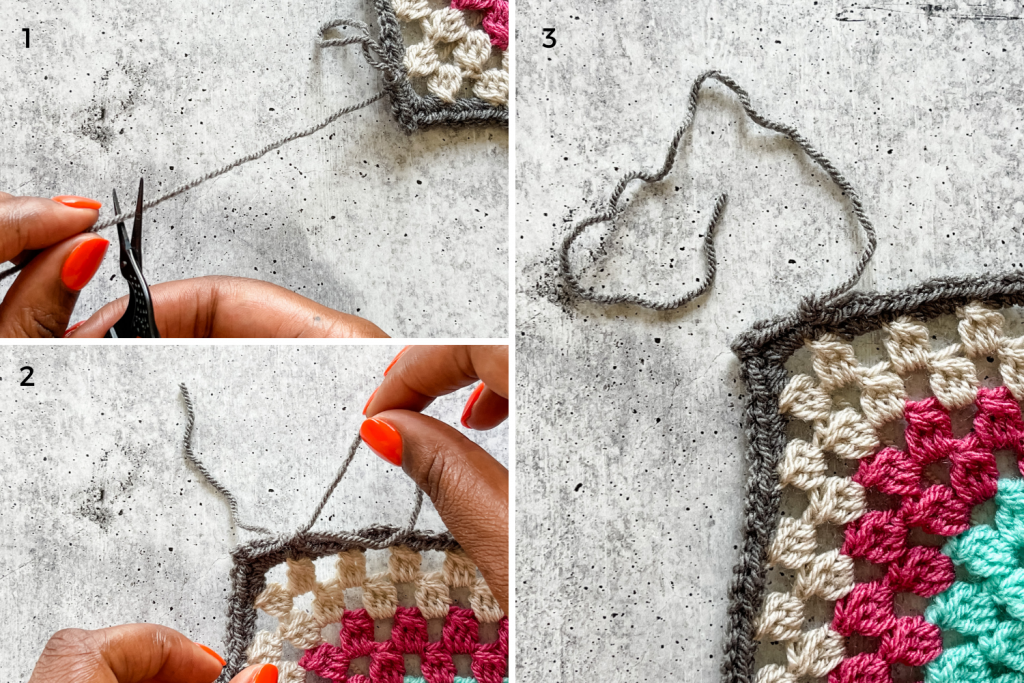
Fastening off is a fancy term in crochet finishing for disconnecting your project from the ball of yarn. You do this by measuring out a length of yarn, about 6″ or so, then cutting the yarn that is attached to your project. Finally, lift the live loop until the yarn end pops out of your work. You can then move onto Step 2.
There is some debate about whether to knot the yarn before fastening off. I find that you don’t need to knot the yarn most of the time and it’s not a practice that I’m in the habit of. But it can help if you use a slippery yarn or just want an added level of security in your crochet. After finishing your last stitch, chain 1. Then fasten off and lift the live loop up and out of your work. Gently tug the tail to tighten the knot. You can then move onto Step 2.
It is important to leave a long tail before you head into Step 2. If your tail is too short, it will be hard to weave in your ends. Short ends can pop out of your work, or even worse, loosen and ruin your stitches. Pro Tip: If you’re not sure how long of a tail to leave when fastening off, always leave more than you think you need. It’s easier to weave in an end that’s too long than one that is too short.
Step 2: Weaving In Ends
After you complete Step 1 of finishing, you will have 2 or more ends that need to be weaved into your work. The ends are the loose bits of yarn, typically found at the very beginning and very end of your work. If you’ve added multiple balls of yarn or have multiple color changes, you might have more than 2 ends to weave in once your project is done.
The goal of weaving in ends in crochet finishing is twofold: (1) make sure the ends are secure and don’t work their way out of the project and, (2) make sure the ends are hidden so they are not obvious to the naked eye when wearing or using the crocheted piece. You can’t overdo it when weaving in ends, but you can underdo it. Take your time and make sure the ends are truly secure.
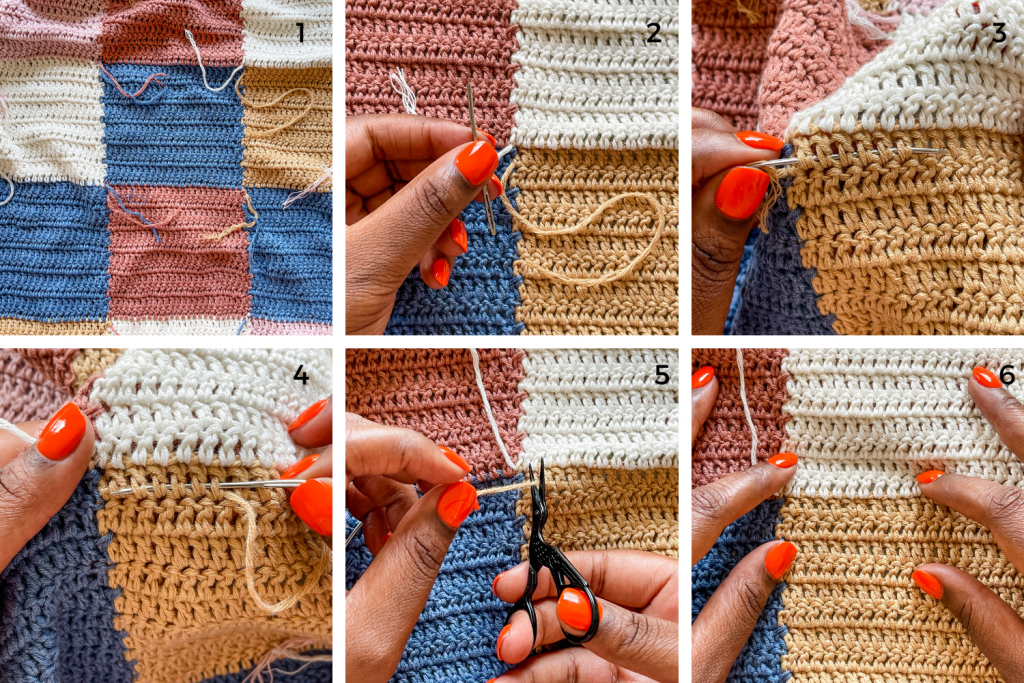
Every maker sews/weaves in their ends differently. Here’s my preferred method for securing the ends:
- Turn your work so you are looking at the back, or the “wrong side” of the project.
- Thread the yarn tail onto a metal tapestry needle.
- Find the base of a row of stitches near the yarn end. Thread the tapestry needle through the loops at the base of several stitches in one direction.
- Prepare to work under the same loops in the opposite direction. Skip the very first loop, and thread the tapestry needle through the loops after it.
- Snip off any remaining yarn close to the project, being careful not to cut the project itself.
- Massage the stitches to further hide the yarn end.
If you are working with a slippery yarn, thread your yarn under as many stitches as you need to feel secure. Simply move to the row of stitches above or below the row you just worked into and repeat these steps with the same yarn end.
Step 3: Blocking
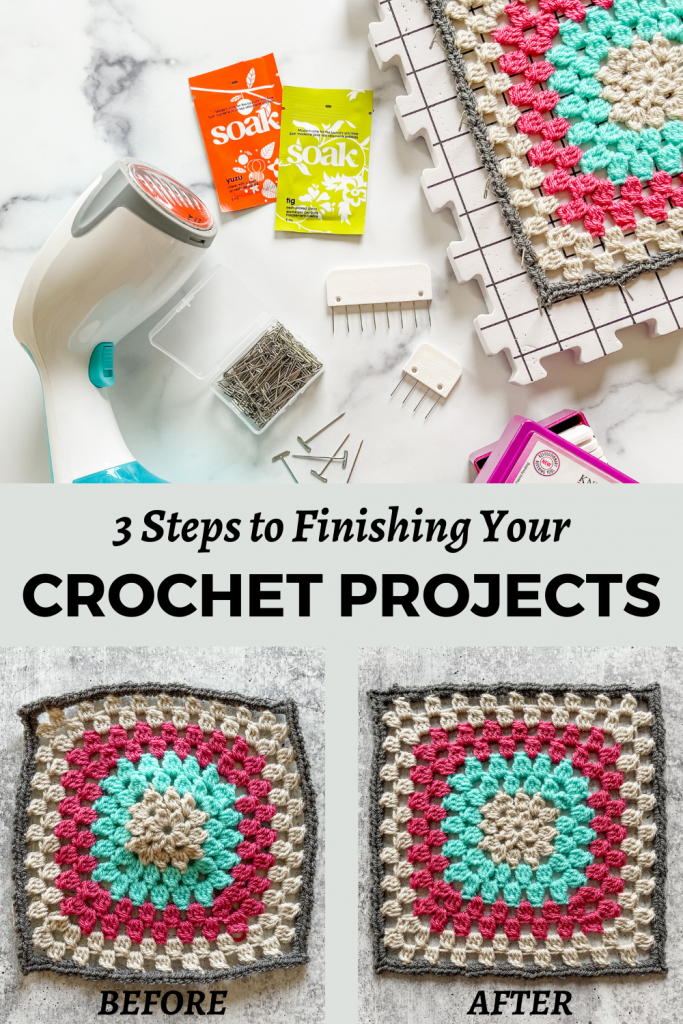
Once you’ve fastened off and your ends are secured, it’s time to block. Crocheters will debate the need for blocking until the cows come home. In my studio, blocking is 100% necessary for crochet finishing. Items like amigurumi (crochet dolls), baskets, and rugs may not need to be blocked. But blankets, wearables, motifs, and accessories should be.
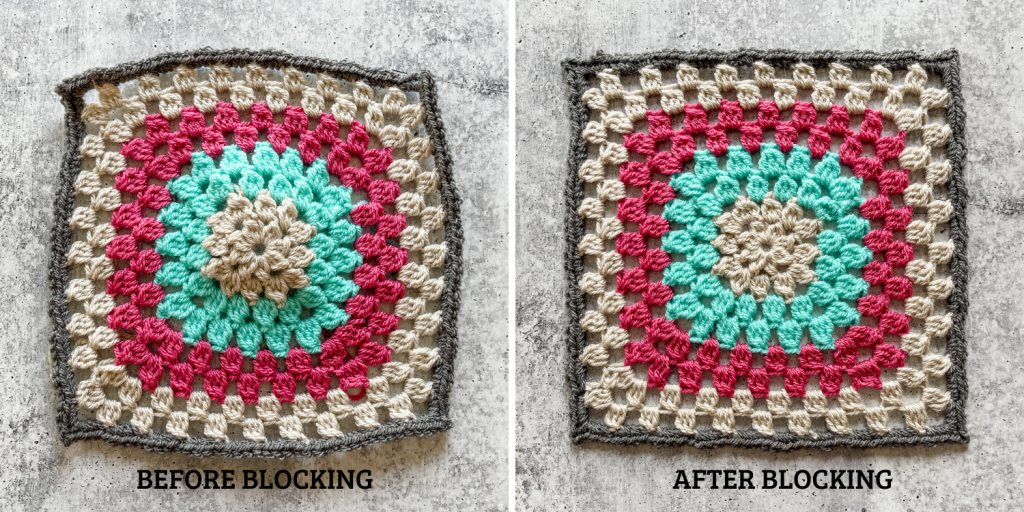
What is blocking? Blocking is the process of introducing water, shaping, and dry time to your crochet projects.
What does blocking do? Blocking achieves the following:
- Restore your fibers to their intended glory. Blocking allows fibers to expand into their natural shape, reintroducing some of the bounce and softness they might loose in the stitching process.
- Clean the fibers. Dirt, oil, and odor may have come in contact with your project while it was in progress. Add a small amount of no-rinse soap to your blocking process to thoroughly clean your makes and add a pleasant scent.
- Aid in shaping. Introducing moisture (and sometimes heat) to your project makes it more pliable, thus making it easy to manipulate it into the shape you want. This is helpful for lace projects and items that need to be coaxed into a particular shape.
- Softens and conditions crochet fabric. If you’re looking for next-to-skin softness, blocking is the way to go. Yarn manufacturing can make fibers rough and irritating. Blocking can loosen or remove any irritants that are covering up the softness of your crochet fabric.
How does blocking work? Blocking has three components: water, shaping, and drying. If you do these three things, you are indeed blocking. You can use different methods and even complete these steps in a different order. Your preferred methods will change based on project type, fiber, and desired outcome. With so many variables, there’s no cut-and-dry answer for how to block your specific project. Use the info below and go with your gut.
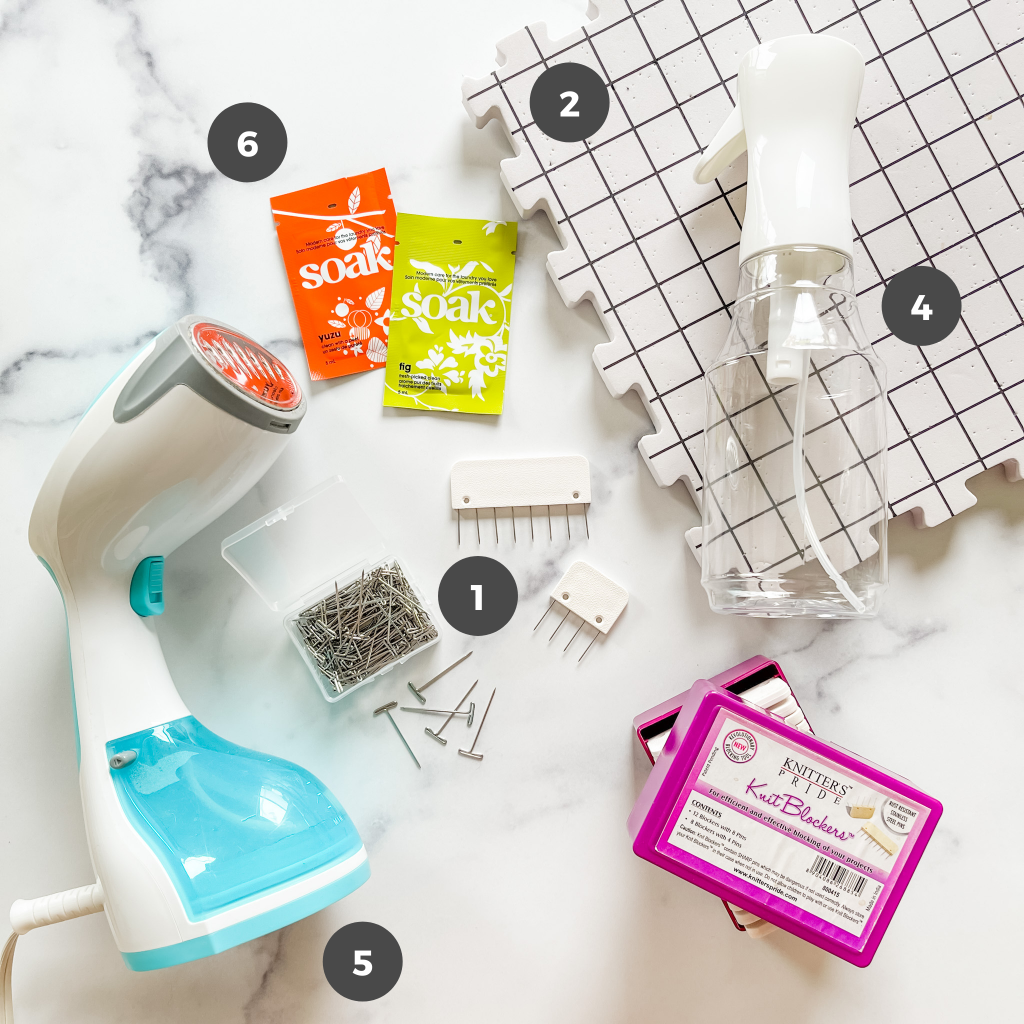
What supplies do I need for blocking? It’s a good idea to have the following items on hand so you can be prepared to block any project, anytime.
- Blocking pins are used to hold your project in place while it is drying. Look for rust-proof sewing pins or T-pins. For more efficient blocking, grab a set of Knit Blockers, which allow you to place multiple pins in one easy motion.
- Blocking mats or blocking boards are interlocking foam mats that you pin your project to. The foam receives the pins well, but it won’t take on unnecessary moisture, allowing your project to dry quickly. You can use dedicated blocking mats or look for kid’s playroom mats instead.
- Blocking wires are thin metal wires that are extremely helpful for blocking projects with long edges. Weave these flexible wires along the length of the edge, then pin the project in place. You’ll use less pins and get a straighter edge with blocking wires.
- A spray bottle is helpful for spray blocking. You can control the direction and amount of moisture you are adding to your project without oversaturating it.
- A garment steamer is a crocheter’s best friend. Steaming is my preferred method for crochet blocking and a garment steamer makes the process quick and painless. Look for a steamer that can be tilted downward without leaking (like THIS ONE!).
- No-rinse soap like Eucalan or Soak helps to clean and refresh the yarn. Soap is not always necessary, but it’s a nice touch and aids in softening the finished project.
- Keep a towel close. I have a dedicated bath sheet that I like to use for blocking. It’s not pretty, but it gets the job done and is very absorbant.
- A fan can help speed up the drying process if you’re in a pinch or if your project is taking longer to dry than expected.
Spray Blocking
Spray blocking is the least aggressive form of blocking, and it’s a great place to start if you’ve never tried blocking before. When spray blocking, you introduce moisture gradually, making the stitches more pliable without over-stretching them. Spray blocking cuts down on dry time and is useful for projects that don’t need too much manipulation. I’ve found this form of blocking most agreeable with animal fibers.
- Fill a spray bottle with lukewarm water. Optional: Add a touch of no-rinse soap to the bottle for added for freshness.
- Spray the project on all sides until it is damp to the touch.
- Pin the project to blocking boards using rust-proof pins. Pay close attention to any straight edges and avoid peaks in your work. Add more pins as necessary and/or use blocking wires.
- Allow the project to dry thoroughly before unpinning it from the mats.
Steam Blocking
Steam blocking is a middle-of-the-road method that works for just about any project and fiber. If I were Goldilocks, this would be my “just right” crochet finishing method. Steaming introduces heat AND moisture to your projects, further aiding in refreshing the fabric and relaxing the stitches. It makes stitches pliable, but not too pliable, and it has a pretty short dry time depending on the fiber. Steaming works for animal- and plant-based fibers, and it works especially well to soften and shape acrylic fibers.
- Pin the project to blocking boards using rust-proof pins. Pay close attention to any edges and avoid peaks in your work. Add more pins as needed and/or use blocking wires.
- Fill your garment steamer with distilled or tap water. Let it heat up. If your garment steamer has settings, adjust it to meet the needs of the fiber you are blocking. DO NOT add no-rinse soap to your garment steamer. Optional: You can use a steam iron instead of a garment steamer. Just be careful not to let the hot plate come in contact with your crochet fabric.
- Apply steam to your pinned project, working slowly and allowing the fabric to become damp to the touch. Pay close attention to seams and edges to ensure they are crisp and straight. Refill the steamer as needed for large projects.
- Allow the project to dry thoroughly before unpinning it from the mats.
Wet Blocking
Wet blocking is the most aggressive form of blocking, but don’t let that scare you. If your fiber can handle it, wet blocking is the most effective way to reveal drape and softness in your crochet fabric. Wet blocking involves submerging your fabric in water to let the individual stitches soak thoroughly.
Consider wet blocking for projects no larger than a pullover sweater (baby blankets would be a yes, but throw size blankets would be a no – go with steam instead). Wet blocking is effective for animal and plant fibers, but not on acrylic (the plastic in acrylic will snap back into shape after wet blocking, making it ineffective). Wet blocking works well for small stitches like single crochet, but can overstretch tall stitches. Overstretched stitches are great for achieving drape, if that’s what you’re going for. Finally, wet blocking is great for opening lace and mesh stitches.
Keep in mind that wet blocking can be a little unpredictable. If you only need a little bit of stretch and drape, go for one of the less aggressive forms of blocking for your crochet finishing. You can also wet block AFTER you’ve tried other methods, but it is nearly impossible to go back.
- Fill a sink or bowl with warm (not hot!) water. Optional: Add a touch of no-rinse soap to the basin for added for freshness.
- Add your project to the water, pressing gently to coax water into all of your stitches. You may see tiny air bubbles float to the surface. This means that water is displacing the air, thoroughly soaking your stitches.
- Leave the project to soak in the water for at least 20 minutes but no longer than a few hours.
- Lift your project out of the water and gently press out the excess water. Be careful not to wring or twist the fabric – this can permanently distort your stitches.
- Place your project as flat as you can onto a towel. Roll the towel around the project and gently press out more excess water. I like to do this by setting the rolled towel on the floor and stepping on it.
- Arrange your blocking boards to the desired size.
- Lay your project onto the blocking boards and pin it into place with rust-proof pins or Knit Blockers. Be sure to lay seams flat so you don’t have any unexpected creases in your blocked work.
- Allow the project to dry thoroughly before unpinning it from the mats.
Crochet Finishing Q&A
Is crochet blocking permanent?
Short answer: it depends. Yarn fibers have “memory”, which means some fibers will bounce back to their original shape if not blocked aggressively enough. Plant fibers have low memory, which is great for drape.
Animal fibers have high memory. That’s why they can stand up to wet blocking so well. You may need to lightly steam animal fiber projects to get them back into shape. Acrylic yarn has the highest memory and benefits from steam blocking. You can “kill” acrylic by steaming it very aggressively, which will make the fabric soft, but it might distort the look of the stitches.
Do I need to block my crochet blanket?
If you want it to look pretty and crisp, 100% YES. No matter what you make your blanket from, it will benefit from some form of blocking. Blocking will add drape, softness, and shape to your blanket. Add a little wool wash to your spray bottle for a clean scent, or lightly mist it with watered-down perfume.
Why does my crochet curl at the corners?
Crochet curls at the corners because of tension. Tension is a natural part of the crochet process and can result in some corners of your work curling toward you or away from you. Don’t dwell on changing your crocheting style too much to correct curling. Instead, plan to block your project as part of crochet finishing. Blocking will address the curling as well as the fabric drape, softness, and freshness.
Can you block crochet with just water?
Absolutely! You can spray block, steam block, and wet block with just water. Adding heat or no-rinse soap to the process has some added benefits, but they’re not always necessary.
How can you block without blocking mats?
If you don’t have blocking mats, lay towels on top of a thick quilt or blanket. Pin your wet blocked project to the towels, or pin down the project you plan to spray/steam block. Complete the blocking process and let the project dry thoroughly. This method won’t have as much ventilation as working on blocking boards, so I recommend using a fan to speed up the drying process.


